National Suicide Prevention Week

Lawndale News Chicago's Bilingual Newspaper - Local News

National Suicide Prevention Week for 2014 is September 8 – 14. This year’s theme is “Suicide Prevention: One World Connected.” Join Norwegian American Hospital in supporting suicide prevention; you can reduce the number of lives shaken by a needless and tragic death. As we observe National Suicide Prevention Week, it is important to remember a few of the warning signs associated with a person who may consider suicide:

  • Threatening or talking about wanting to hurt or kill oneself
  • Looking for ways to kill oneself by seeking access to firearms, available pills or other means
  • Withdrawing from friends, family or society
  • Feeling hopeless, trapped, anxious or unable to sleep or sleeping all the time

If you or anyone you know is in suicidal crisis or severe emotional distress call the National Suicide Prevention Hot Line at 1-800-273-TALK (8255).

The Mexican Independence Movement in Mexican Film

Lawndale News Chicago's Bilingual Newspaper - Local News

by Daniel Nardini

Mexico has been shaped by its long and rich history, and many of these historical events have found their way into both Mexican film and TV. There are many Mexican films and TV series about the war for independence, the French invasion, and the Mexican Revolution. The Mexican War for Independence is certainly well represented in film, and there are at least three Mexican films and one TV series I wish to highlight here. The three films I wish to say something about are Morelos: sierra de la nacion, Morelos, and Hidalgo: La historia jamas contada.

The film Morelos: sierra de la nacion (Morelos: Servant of the Nation), produced in 1965 by the famed director Julio Bracho, tells the story about Jose Maria Morelos y Pavon—the second in command to Miguel Hidalgo who took over the independence fighting forces when Hidalgo was captured. The film follows Morelos until he too is captured by forces loyal to the Spanish Crown. The more recently produced film Morelos (2012) by director Antonio Serrano is a 200th anniversary celebration of Morelos and his fight for Mexican independence. This film deals with the last few years of his fight against the Spanish loyalist forces, his campaign to free Mexico, and his relationship with his men.

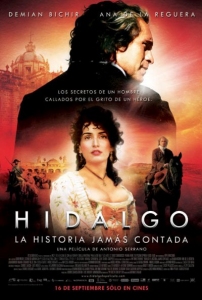
Hidalgo: La historia jamas contada (Hidalgo: The Untold Story), also produced by Antonio Serrano, tells the story about Miguel Hidalgo, the priest forced to leave his wife and children when the Church authorities send him to the small town of Dolores as punishment for his progressive ideas about helping the poor. It was in Dolores that he formed a revolutionary group dedicated to ridding the nation of Spanish rule, and where he read out his famous “Grito” against Spanish rule. The film tells about his life story from the perspective of Hidalgo in a Spanish prison waiting to be executed. This movie was filmed in Guanajuato, San Luis Potosi and Michoacan where Hidalgo’s forces would sweep triumphantly against those Spanish forces sent against him. Filmed on the 200th anniversary of Hidalgo’s rebellion, the film was the most popular movie produced for 2010, and for that the actor Damian Bichir Najera won the Colon de Plata Best Actor Award for his portrayal of Hidalgo.

Likewise, in 2010, the Mexican TV series Gritos de muerte y libertad (Cries of Death and Freedom) tells the story of the struggle for independence from 1808 all the way to the proclamation of the independence of Mexico in 1821. The TV series featured many prominent actors and actresses and all of the episodes were beautifully reconstructed by many Mexican historians in an effort for historical accuracy. The TV series was shot in Dolores Hidalgo, Guanajuato, and various parts of the State of Mexico, and first premiered on August 30th of that year and ended on September 16th (the day of independence). There is no shortage of films, TV shows and even soap operas on many aspects of Mexico’s long history, and films and TV series on Mexico’s independence movement is no exception.

The Cristero War

Lawndale News Chicago's Bilingual Newspaper - Local News

by Daniel Nardini

One of the biggest conflicts in Mexico’s history had been with that between the state and the Roman Catholic Church. Even though the Mexican independence movement was started and led by two priests (Miguel Hidalgo y Costilla and Jose Maria Morelos y Pavon), the Church by and large remained loyal to the Spanish Crown. The man who succeeded in gaining Mexico’s independence from Spain, Agustin de Iturbide, was able to win support from the Catholic Church to help secure the nation’s independence. But when Iturbide was ousted, the status of the Church became insecure. Worse, the Church and its clergy were treated brutally by Mexican government forces during the War of the Reform (1857-1861). During this period, the Church faced massive persecution, and this is why many in the Church threw their support behind the French invasion of Mexico (1862-1867). The French and their Mexican supporters lost, and this led to more persecution of the Church.

This persecution ceased when Porfirio Diaz seized power in 1876. He made peace with the Church, and that is how it remained until 1910. The Mexican Revolution brought back a great deal of the conflict between Church and state. The Mexican Constitution of 1917 stripped the Church of its properties, and prohibited religious education in the schools. Mexico’s President Alvaro Obregon further extended the persecutions against Catholics during his reign. Obregon’s successor, Plucarco Elias Calles, was no better in his treatment of the Church. For the most part, followers of the Church and its clergy tried passive resistance to the brutality of the state. But this persecution drove many to the breaking point. The breaking point came in 1926 when 400 Catholic followers armed themselves and took over a church in Guadalajara, Soon, the whole revolt spread throughout northern Jalisco state and into Durango where ranchers joined in an open rebellion.

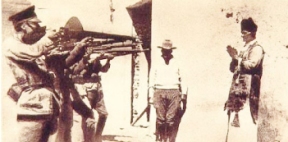
The government’s move was swift and brutal. Thousands of Catholic rebels were massacred—many were hanged under trees and by lamp posts where their bodies were left to rot. Churches were burnt down and priests were slaughtered. The rebellion, called the Cristero War (after the words “Cristo del Rey” or Jesus the King uttered by Catholic followers before battle), tore Mexico apart and many feared the revolution would start over again. Despite what it felt towards the Mexican government, the Vatican tried to negotiate a peace between the Mexican government and the Mexican Catholic Church. The U.S. government, through its ambassador to Mexico, Dwight Whitney Morrow, also tried to convince Mexican President Calles of the necessity of making peace with the Catholic rebels. The peace process went back and forth, and was almost completely derailed when former Mexican President, and a good friend of Calles, Alvaro Obregon, was assassinated by a Catholic fanatic named Jose de Leon Toral.

Finally, in 1929, newly appointed and then elected Mexican President Emilio Portes Gil realized that something had to be done to end the rebellion. President Portes allowed the Church to keep some of their lands, reopen the churches for church services, allow some religious education, and end government persecution of the Catholics. While some anti-religious laws remained in the legal books in Mexico for decades after this, the Catholic Church was allowed gradually to be able to have complete freedom of practice and to co-exist with the state. Today, there is no issue of freedom of religion—the Mexican government in 1992 finally changed that part of the Constitution so now there is complete freedom of religion and the Catholic Church is free to practice and exist. In a world where religious persecution and wars still very much take place, Mexico has become one of those countries where freedom of religion and tolerance of all religions is a constitutional guarantee.

Jóse Hernández: the Musician

Lawndale News Chicago's Bilingual Newspaper - Local News

By: Ashmar Mandou

Internationally recognized musician, composer, and educator, José Hernández brings the world of mariachi music into the hearts of many across the globe.

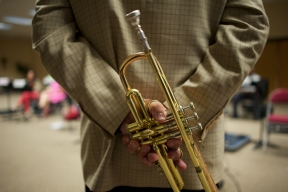
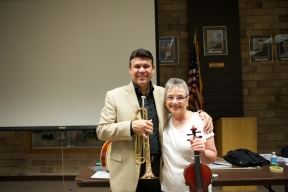
A fifth generation mariachi, Hernández is the founder of two world-renowned ensembles: Mariachi Sol de México and Reyna de Los Angeles, America’s first all-female professional mariachi ensemble. Hernández’s love for mariachi music is contagious. Early this summer, Hernández conducted an intensive four-day mariachi training course with music educators at Chicago’s VanderCook College of Music. Hernández continues to promote the art of mariachi by creating new compositions and building relationships with various organizations across the country, including Chicago.

Lawndale News Chicago's Bilingual Newspaper - Local News

As a fervent ambassador for mariachi music, Hernández is working to inspire future generation of musicians through educational initiatives he has developed: the Mariachi Nationals and Summer Institute and the Mariachi Heritage Society. Recently, Hernández, along with the Mariachi Heritage Foundation, made news that next summer Mariachi Heritage Foundation will host Chicago’s first ever mariachi music festival. Hernández’s goal is to continue to promote the culture and heritage through the music of mariachi

On Thursday, Sept. 11th at the National Museum of Mexican Art, 1852 W. 19th St., the Mariachi Sol de México de José Hernández will perform at a fundraising concert on behalf of the Mariachi Heritage Foundation (MHF). The funds raised will support the first year of the standards-based mariachi music program implemented by the MHF and Chicago Public Schools (CPS) at five elementary public schools.

The Little Village Chamber of Commerce Hosts the 45th Annual Mexican Independence Day Parade

Lawndale News Chicago's Bilingual Newspaper - Local News

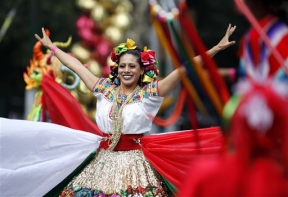
The Little Village Chamber of Commerce (LVCC) invites you to celebrate the 45th Annual Mexican Independence Day Parade, at noon, September 14, in Chicago’s Little Village neighborhood. The parade – which celebrates the beginning of Mexico’s independence from Spain in 1810 – kicks-off from Albany Avenue and proceeds west on 26th Street to Kostner Avenue at noon. The parade is considered one of the largest in the United States and gathers approximately 500,000 attendants along the 2.5 mile famous business corridor. Governor Pat Quinn and Mayor Rahm Emanuel will join this year’s grand marshal, Mexican television personality and game show host Marco Antonio Regil and dozens of Latino leaders from Illinois. Regil currently hosts the Spanish-language version of Family Feud.

Latino Policy Forum Kicks Off Voto X Voto Campaign to Register More Latino Voters

Lawndale News Chicago's Bilingual Newspaper - Local News

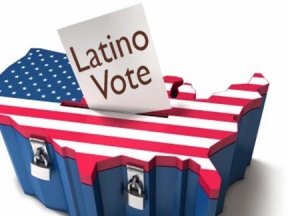
Targeting more than 350,000 unregistered, eligible Latino voters in Illinois, the Latino Policy Forum is proud to announce the launch of the Voto X Voto campaign—a collaborative effort including members of the Illinois Latino Agenda and other civic organizations to register 5,000 voters by October 7 and reach one million Latinos through coordinated public outreach.

“Despite accounting for the largest population growth in Illinois since the turn of the millennium, Latino residents’ political power has not grown at the same rate,” said Sylvia Puente, the Forum’s executive director. “This midterm election is an important opportunity to mobilize community members to participate in the political process.”

Voto X Voto—or Vote by Vote—focuses on the exponential power an individual vote can have on communities and the potential influence thousands of new Latino voters could have on elections. Just 19,000 votes determined the 2010 Illinois gubernatorial race. On Election Day, the Forum expects thousands of new voters to go to the polls and cast an educated ballot. This campaign will work to remove barriers that exist for eligible voters and will contribute to building a voting culture among Latinos in Illinois.

“Latinos have a lot at stake in the next election. With greater turnout during Early Voting and Election Day, they have potential to determine the outcome of major statewide offices,” said Sol Flores, executive director of La Casa Norte. La Casa Norte, a member of the Illinois Latino Agenda, is one of 11 organizations that have signed on to this effort.

Cícero Nomina una Nueva Reina del Día de la Independencia Mexicana

Lawndale News Chicago's Bilingual Newspaper - Noticias Locales

Por: Ashmar Mandou

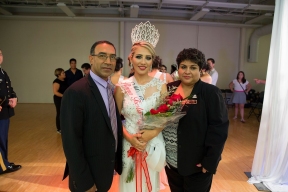
Nacida en la Ciudad de México, la residente de Cícero Dafne Villaseñor fue nominada la nueva reina de Cícero de la Celebración de Señorita del Día de la Independencia Mexicana, un evento que organiza el Comité de Cultura Mexicana de Cícero.

Graduada de la Secundaria Morton East, Villaseñor, de 21 años, está estudiando Finanzas de Negocios y Mercadotecnia en el Morton College y actualmente trabaja en la Compañía El Milagro donde tramita las cuentas por pagar y oficios administrativos diarios.

“Es un honor ganar la Celebración de Señorita Cícero del Día de la Independencia Mexicana”, dice Villaseñor. “Con esta maravillosa oportunidad pretendo darle a los inmigrantes, que son como yo, esperanza de que sus sueños también se pueden hacer realidad.”

Villaseñor que se proclama una soñadora, pretende graduarse y continuar su educación en la Universidad de Illinois en Chicago para obtener su bachillerato en negocios y algún día ser parte del grupo ejecutivo más alto en una corporación Fortune 500 y finalmente ser propietaria de su propio negocio.

“Yo soy un ejemplo de que todo es posible. Si se tiene un sueño, hay que trabajar duro y buscarlo,” dije Villaseñor. A través de sus propias experiencias, Villaseñor es un testamento viviente de que todo es posible. Ella espera dar a muchos inmigrantes en todo Cícero esperanza de que su tiempo llegue cuando ellos no vivan más con miedo a la deportación. Su plataforma como Nueva Señorita Cícero será dirigirse a muchos problemas, tales como el acoso y la violencia doméstica. Villaseñor se va a asociar con varias organizaciones sin fines de lucro para hacer conciencia de estos problemas que afectan a muchos residentes de su comunidad. “Yo quiero traer más conciencia de esos problemas importantes que afectan a muchos,” dijo Villaseñor. “El próximo año, realmente estoy esperando construir relaciones. Como una mujer mexicana, me siento orgullosa de dónde vengo y traigo el amor y compasión de una cultura en todo lo que hago.

Cicero will celebrate Mexican Independence Day, El Grito, and Fiestas Patrias beginning this Friday at Community Park. Visit the Town of Cicero’s Facebook page for more details.

Cícero va a celebrar el Día de Independencia Mexicana, El Grito y Fiestas Patrias a partir de este viernes en el parque Community. Visite la página de Facebook de la municipalidad de Cícero para más detalles

Photo Caption: (De la izquierda) El Concejal de Cícero Víctor García, Señorita Cícero Dafne Villaseñor y la Secretaria de Cícero María Punzo-Arias.

Josué Aldana: el Muralista

Lawndale News Chicago's Bilingual Newspaper - Noticias Locales

Por: Ashmar Mandou

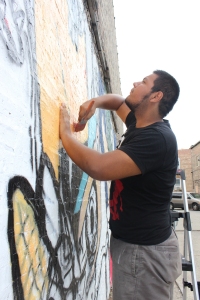
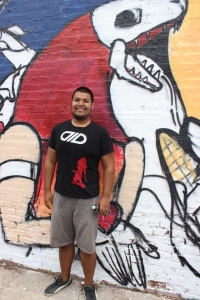
El artista autodidacta Josué Aldana está cambiando los corredores de La Villita de mural en mural con odas a sus raíces mexicanas. “No hay nada que me dé mayor placer o que me dé más entusiasmo que crear arte en el barrio de La Villita, mi comunidad,” dijo Aldana.

Aldana es un muralista independiente del área de Lawndale del Sur, inició su carrera colaborando con Enlace Chicago, un grupo de arte público de Chicago y con Ceasefire. En sus años de formación, Aldana pasó un tiempo viviendo en México donde quedó cautivado por los artistas callejeros locales, los que le ayudaron a desarrollar su estilo único a través de colaboraciones en murales de la comunidad.

“Nosotros crecemos pasando por tanto aquí en La Villita,” dijo Aldana. “A veces se nos olvida como comunidad. Sufrimos a través de tanto cuando se refiere los bajos recursos para los programas para después de la escuela, sufrimos a través de problemas ecológicos, sufrimos a través de no tener suficiente espacio verde, pero entre más nos golpea, más resistimos… la forma como yo pienso de La Villita es como una perla… somos una perla de comunidad. Eso es lo que yo quiero que mi comunidad recuerde cuando vean mis murales por todo el barrio.”

Lawndale News Chicago's Bilingual Newspaper - Noticias Locales

Aldana se ha asociado con muchos muralistas y se le reconoce como uno de los artistas callejeros de Chicago, empezó como aprendiz con María Gaspar y Rahman Statik. Los diseños de los murales de Aldana están con arte latinoamericano contemporáneo y barroco, mostrando representaciones de la historia y el folklor mexicano. Presentado en el Chicago Tribune, Aldana ha trabajado en los años recientes con el grafito de pandilla en la comunidad de La Villita. Su último proyecto, que fue lanzado por Red Bull, puede verse en el 4049 W. 26ª St., esquina con Karlov, va a dirigirse a las festividades de la Independencia Mexicana y a través de su asociación con la Cámara de Comercio de La Villita.

“What I get to for a living…for my community, is a huge reward,” said Aldana. “As we celebrate Mexican Independence Day and celebrate Hispanic Heritage Month…what I want my community to know…especially when they see murals around the corridors, is that we are stronger together and that together we can make positive changes.”

“Lo que obtengo para vivir… para mi comunidad, es una gran recompense,” dijo Aldana. “Al celebrar el Día de la Independencia Mexicana y celebrar el Mes de la Herencia Hispana… lo que yo quiero que mi comunidad sepa… especialmente cuando vean murales por los corredores, es que somos más fuertes juntos y que juntos podemos lograr cambios positivos.”

El Movimiento de Independencia Mexicano y el Cine Mexicano

Lawndale News Chicago's Bilingual Newspaper - Noticias Locales

Por Daniel Nardini

México ha sido modelado por su larga y rica historia y muchos de esos eventos históricos han encontrado una vía tanto en el cine mexicano con en la televisión. Hay muchas películas mexicana y series de televisión sobre la independencia, la invasión francesa y la revolución mexicana. La Guerra de Independencia Mexicana está muy bien representada en el cine y hay al menos tres películas mexicana y una serie de televisión que me gustaría mencionar aquí. Las tres películas sobre las que deseo decir algo son: Morelos: sierra de la nación, Morelos e Hidalgo: La historia jamás contada.

La película Morelos: siervo de la nación, producida en 1965 por el famoso director Julio Bracho, narra la historia acerca de José María Morelos y Pavón –el segundo al mando de Miguel Hidalgo que tomó control sobre las fuerzas que lucharon por la independencia cuando capturaron a Hidalgo. La película sigue a Morelos hasta que a él también lo capturas las fuerzas leales a la corona española. Morelos, la película producida más recientemente (2012) por el director Antonio Serrano es una celebración del 200º aniversario de Morelos y su lucha por la independencia mexicana. Esta película trata de los últimos años de su lucha contra las fuerzas realistas españolas, su campaña para liberar a México y sus relaciones con sus hombres.

Lawndale News Chicago's Bilingual Newspaper - Noticias Locales

Hidalgo: La Historia Jamás Contada, también producida por Antonio Serrano, cuenta la historia de Miguel Hidalgo, el sacerdote obligado a dejar a sus esposa e hijos cuando las autoridades de la iglesia lo envían al pequeño pueblo de Dolores como castigo por sus ideas progresistas acerca de ayudar a los pobres. Fue en Dolores que él formó un grupo revolucionario dedicado a librar a la nación del control español y fue donde leyó su famoso “grito” contra el control español. La película cuenta sobre la historia de su vida desde la perspectiva de Hidalgo en una prisión española esperando ser ejecutado. Esta película se filmó en Guanajuato, San Luis Potosí y Michoacán donde las fuerzas de Hidalgo corrieron exitosamente contra las fuerzas españolas que fueron enviadas en su contra. Filmada en el 200º aniversario de la rebelión de Hidalgo, la película fue la más popular que se produjo en 2010 y por su actuación el actor Damián Bichir Nájera ganó el Premio Colón de Plata al Mejor Actor por su caracterización de Hidalgo.

De la misma manera, en 2010 la serie mexicana de televisión Gritos de Muerte y Libertad cuenta la historia de la lucha por la independencia de 1808 hasta la proclamación de la independencia de México en 1821. La serie de televisión presenta mucho actores y actrices importantes y todos los episodios fueron reconstruidos con mucha belleza por muchos historiadores mexicanos para lograr una autenticidad histórica. La serie de televisión se filmó en Dolores Hidalgo, Guanajuato y en varias partes del Estado de México y se estrenó el 30 de agosto de ese año y terminó el 16 de septiembre (Día de la Independencia). No hay una falta de películas, programas de televisión ni de telenovelas sobre muchos aspectos de la larga historia de México y las películas y series televisivas sobre el movimiento independentista no es la excepción.

La Corte del Circuito del Condado de Cook anuncia los Tours de los Juzgado durante el Mes de la Herencia Hispana

Lawndale News Chicago's Bilingual Newspaper - Noticias Locales

En honor del Mes Latino de Herencia Hispana, la Corte del Circuito del Condado de Cook va a ser anfitriona de dos días de tours del Juzgado del Centro Richard J. Daley los días 29 y 30 de septiembre.

“Los Tours Anuales de los Juzgados del Mes Latino de la Herencia Hispana son parte de la serie de visitas de todo el año del Mes de la Herencia Comunitaria de los Juzgado, los que coinciden con la observación de celebración de la diversidad racial y étnica. Los tours ayudan a la corte a alcanzar las muchas diversas comunidades del Condado de Cook con la esperanza de aumentar el entendimiento de cómo funciona el sistema legal y para asegurar que la oportunidad de ver de primera mano cómo funciona la corte esté disponible para todos,” dijo Timothy C. Evans Magistrado de la Corte del Distrito del Condado de Cook. Ahora, en su 15º año, en los tours han participado miles de residentes del Condado de Cook

Ubicado en el 50 de West Washington Street en Chicago, el Centro Daley es la corte principal de la Corte del Circuito del Condado de Cook, uno de los sistemas judiciales unificados más grandes del país. Las personas o grupos que planeen asistir a las Visitas de la Corte del Mes Latino de la Herencia Hispana deben contactar a Milissa Pacelli, de la Oficina de Asunto Públicos de la Corte del Circuito del Condado de Cook en el 312-603-1927 antes del miércoles 24 de septiembre. Para más información acerca de las visitas o para información general, visite www.cookcountycourt.org.