Tamales de Pollo en Adobo

Lawndale News Chicago's Bilingual Newspaper - Food

Times
Total: 1 hora 50 minutos
Preparation: 30 minutos

Servings: 60 tamales

Ingredients

  • Hojas de maíz secas
  • 7 tazas de masa de maíz instantánea para tamales
  • 1 1/4 tazas de manteca vegetal, derretida
  • 1 ¼ cucharadita de sal
  • 1 cucharadita de caldo de pollo en polvo
  • ½ cucharadita de polvo par a hornear
  • 6 a 7 tazas de caldo de pollo reducido en sodio Progresso™ (de un cartón de 32 oz)
  • 1/3 de cebolla mediana
  • 2 chiles chipotles en adobo, de una lata de 7 oz
  • 2 dientes de ajo, finamente picado
  • 2 ½ tazas de caldo de pollo reducido en sodio Progresso™ (de un cartón de 32 oz)
  • 1 lata (14.5 oz) de tomates Muir Glen™ organic fire roasted tomatoes, drained
  • ¼ taza de puré de tomate
  • 2 cucharadas de vinagre de vino blanco
  • 1 ½ cucharaditas de caldo de pollo en polvo
  • ½ cucharadita de hojas de orégano seco, si lo deseas
  • ¼ cucharadita de sal
  • 2 cucharaditas de aceite vegetal
  • 4 tazas de pollo deshebrado cocido

Instructions

  • Pon las hojas de tamal en agua caliente por 30 minutos para que se ablanden y corta tiras para cerrarlos. Sécalas en toallas de papel. Deja a un lado.
  • Mientras tanto, en un plato grande hondo, combina los ingredientes de la masa y 6 tazas de caldo de pollo. Bate con batidora eléctrica hasta que se forme la masa. Agrega mas caldo de pollo si la masa esta muy seca. Tiene que tener la consistencia húmeda para que no queden duros.
  • En la licuadora agrega la cebolla, chipotles, ajo, caldo de pollo, tomates, puré, vinagre, caldo de pollo en polvo, orégano y la sal. Cubre y licua hasta que todo este bien molido.
  • En una olla de 3 cuartos de galón, calienta el aceite a fuego medio alto. Agrega la salsa de tomate licuada. Cocina 10 minutos, mezclando ocasionalmente hasta que este caliente. Agrega el pollo, calienta a fuego medio bajo durante 15 minutos mas o que la salsa espese un poco. Cuela la salsa y déjala a un lado caliente para servirla con los tamales.
  • Para cada tamal pon 3 cucharada de masa a la mitad de la hoja de maíz. Expande un poco con espátula la masa. Pon 1 cucharada de relleno. Dobla los lados del tamal hacia el centro y súbelo para formar como una bolsita. Ata el tamal arriba con una tira.
  • En una tamalera o 2 ollas de 5 cuartos de galón con una parrilla agrega agua caliente pero que no toque los tamales. Pon algunas hojas de maíz; ponla a fuego medio. Coloca los tamales con la tira viendo arriba (30 en cada olla de 5/4 galón). Cubre y ya que salga vapor reduce el fuego a bajo. Deja cocinar durante 1 hora o hasta que la masa se haya cocido y este mas firme. Destapa y deja reposar 15 minutos.
  • Sirve con la salsa, si lo deseas.

El Foro de Políticas Latinas lanza la Campaña Voto X Voto para Registrar a más Votantes Latinos

Lawndale News Chicago's Bilingual Newspaper - Noticias Locales

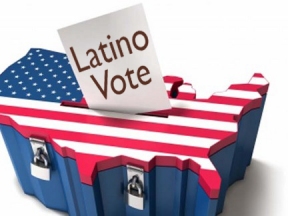
Dirigido a más de 350,000 votantes latinos no registrados en Illinois, el Foro de Políticas Latinas se enorgullece en anunciar el lanzamiento de la Campaña Voto X Voto –un esfuerzo conjunto que incluye a miembros de la Agenda Latina de Illinois y otras organizaciones cívica para registrar a 5,000 votantes para el 7 de octubre y alcanzar a un millón de latinos a través de un esfuerzo público coordinado.

“A pesar de contar con el más alto crecimiento poblacional en Illinois desde el inicio del milenio, la fuerza política de los residentes latinos no ha crecido a la misma velocidad,” dijo Sylvia Puente, la directora ejecutiva del Foro. “Esta elección de medio término es una oportunidad importante para movilizar a los miembros de la comunidad para que participen el proceso político.

El Voto X Voto –o Voto por Voto—se enfoca en el potencial exponencial que puede tener el voto individual en las comunidades y el potencial que puede tener en las elecciones de influir a miles de nuevos votantes latinos. A penas 19,000 votos determinaron la elección de gobernador de 2010. El día de las elecciones, el Foro espera que miles de nuevos votantes vayan a votar y que emitan un voto educado. Esta campaña va a trabajar

en remover las barreras que existen para los posibles votantes y va a contribuir en construir una cultura de voto entre los latinos de Illinois.

“Latinos have a lot at stake in the next election. With greater turnout during Early Voting and Election Day, they have potential to determine the outcome of major statewide offices,” said Sol Flores, executive director of La Casa Norte. La Casa Norte, a member of the Illinois Latino Agenda, is one of 11 organizations that have signed on to this effort.

“Los latinos tienen mucho por decidirse en las próximas elecciones. Con una asistencia mayor durante el Voto Temprano y el Día de Elecciones, tienen el potencial de determinar el resultado de los cargos más importantes en el estado,” dijo Sol Flores, directora ejecutiva de La Casa Norte. La Casa Norte, es miembro de la Agenda Latina de Illinois y es de las 11 organizaciones que se han apuntado en este esfuerzo.

La Guerra de los Cristeros

Lawndale News Chicago's Bilingual Newspaper - Noticias Locales

Por Daniel Nardini

Uno de los mayores conflictos en la historia de México ha sido entre el estado mexicano y la Iglesia Católica. A pesar de que el movimiento de independencia mexicano se inició y lo dirigieron dos sacerdotes (Miguel Hidalgo y Costilla y José María Morelos y Pavón), la iglesia en su mayoría se mantuvo leal a la Corona española. Agustín de Iturbide, el hombre que logró obtener la independencia de México de España, pudo ganarse el apoyo de la Iglesia Católica para ayudar a asegurar la independencia de la nación. Pero cuando Iturbide fue expulsado, es estado de la iglesia se volvió muy inseguro. Pero aún, a la Iglesia y a la curia las fuerzas del gobierno mexicano los trataron de manera brutal durante la Guerra de La Reforma (1857-1861). Durante este período, la Iglesia se enfrentó a una persecución masiva y esta es la razón por la que muchos miembros de la Iglesia le dieron su apoyo a la invasión francesa de México (1862-1867). Los franceses y sus aliados mexicanos perdieron y esto llevó a más persecuciones de la Iglesia.

Esta persecución cesó cuando Porfirio Díaz tomó el poder en 1876. Él hizo las paces con la Iglesia y así es como permaneció hasta 1910. La Revolución Mexicana trajo nuevamente mucho del conflicto entre la Iglesia y el estado. La Constitución Mexicana de 1917 le quitó las propiedades a la iglesia y prohibió la educación religiosa en las escuelas. El Presidente de México Álvaro Obregón aumentó las persecuciones contra los católicos durante su dominio. El sucesor de Obregón, Plutarco Elías Calles no era mejor en cuanto a su trato de la Iglesia. En su mayor parte los seguidores de la Iglesia y la curia trataron de ejercer una resistencia pasiva a la brutalidad del estado. Pero esta persecución llevó a muchos a los extremos. El punto crucial llegó en 1926 cuando 400 seguidores católicos se armaron y tomaron una iglesia en Guadalajara. Pronto, la revuelta se regó a través de todo el norte del Estado de Jalisco y a Durango en el que los rancheros se unieron en una rebelión total.

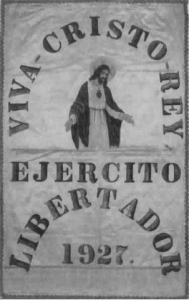
La reacción del gobierno fue rápida y brutal. Miles de rebeldes católicos fueron masacrados –a muchos los colgaron de los árboles y en poses de alumbrado donde dejaron los cuerpos hasta descomponerse. Quemaron iglesias y asesinaron a los sacerdotes. La rebelión se llamó la Guerra de los Cristeros (por las palabras Cristo es Rey que eran el grito que los seguidores católicos daban antes de la batalla) y destruyó a México y muchos pensaron que se iniciaría nuevamente la Revolución. A pesar de sus sentimientos hacia el gobierno mexicano, el Vaticano trató de negociar la paz entre el gobierno mexicano y la Iglesia Católica Mexicana. El gobierno de los EE. UU. A través de su embajador en México, Dwight Whitney Morrow, también trató de convencer al Presidente Calles de la necesidad de alcanzar la paz con los rebeldes católicos. El proceso de paz iba de un lado al otro y casi se perdió cuando Álvaro Obregón, el expresidente mexicano y un buen amigo de Calles, fue asesinado por un fanático católico llamado José de León Toral.

Finalmente en 1929 el recién electo presidente mexicano Emilio Portes Gil se dio cuento de que había que hacer algo para terminar con la rebelión. El presidente Portes permitió que la Iglesia conservara algunas de sus tierras, reabrió las iglesias permitiendo los servicios religiosos, permitió algo de educación religiosa y terminó con la persecución gubernamental de los católicos. Mientras que algunas leyes anti católicas permanecieron vigentes en México por varias décadas después de esto, a la Iglesia Católica se le fue permitiendo gradualmente alcanzar una completa libertad de practicar la relación y poder coexistir con el estado. Hoy, no hay ningún problema con la libertad de culto – en 1992 el gobierno mexicano cambió esa parte de la constitución y ahora hay completa libertad de cultos y la Iglesia Católica es libre de practicar sus ritos y de existir. En un mundo en el que la persecución religiosa y las guerras aún son frecuentes, México se ha convertido en una de esos países en lo que la libertad de cultos y la tolerancia a todas las religiones es una garantía constitucional.

State’s Medical Cannabis Patient and Caregiver Application Process Begins

Lawndale News Chicago's Bilingual Newspaper - Health

Patient registration for the Illinois Medical Cannabis Pilot Program starts this week. The Illinois Department of Public Health (IDPH) is accepting applications for qualifying patients and caregivers who wish to apply for a medical cannabis registration identification card. Applications are being accepted both electronically and through the mail.

Qualifying patients whose last names begin with A – L have two months (September 2 – October 31) to submit their applications. Patients whose last names begin with M – Z may submit an application from November 1– December 31. Applications can be submitted electronically at www.medicalcannabispatients.illinois.gov, or through the mail to:

Illinois Department of Public Health
Division of Medical Cannabis
535 W. Jefferson Street
Springfield, IL 62761-0001

IDPH is also accepting physician certification forms through the mail. More information about the patient application process can be found online at www.mcpp.illinois.gov in the Frequently Asked Questions section. For any questions regarding patient and caregiver registration, please contact the DPH Division of Medical Cannabis at (855) 636-3688 or DPH.MedicalCannabis@illinois.gov.

UIC Open House

Lawndale News Chicago's Bilingual Newspaper - Education

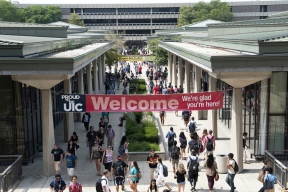
The University of Illinois at Chicago will showcase its diverse programs and academic opportunities as it welcomes thousands of prospective students, families, friends, alumni and community members to the UIC Open House. UIC Open House will be held September 13th from 8a.m., to 2p.m., at various campus locations, including UIC Forum, 725 W. Roosevelt Rd.

The open house will feature a variety of informational activities involving UIC’s colleges, departments and organizations. The program includes admissions and financial aid sessions, guided tours of the campus and residence halls and academic presentations featuring UIC faculty. Guest check-in will be located at the UIC Forum, where UIC representatives for various academic programs and support services will be available to answer questions. For more information about open house activities and registration, visit openhouse.uic.edu.

A Victory for Immigrant Rights

Lawndale News Chicago's Bilingual Newspaper - Commentary

by Daniel Nardini

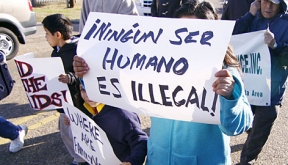
In an important legal victory, the American Civil Liberties Union (ACLU) has finally been able to prevent either Immigration and Customs Enforcement (ICE) or the U.S. Border Patrol in southern California from ever tricking, threatening or coercing any non-U.S. citizen to sign a “voluntary return affidavit” against their will and without the presence of legal representation. For years, ICE or U.S. Border Patrol personnel were able to use this loophole in the immigration provisions to threaten people living in southern California to “either sign on the dotted line” or face prison. What people were not told was that if they were allowed to go before an immigration judge their case would actually get a legal review and the chances are they might be allowed to stay in the U.S., especially if they have family in this country (and includes U.S.-born children). In the ACLU lawsuit, Lopez-Venegas v.s. Johnson, an estimated several hundred thousand Mexican nationals will be able to return to the United States to have their cases heard before immigration judges. Also, as part of a settlement of the lawsuit, all U.S. immigration detention centers in California will have working phones where undocumented or legal non-U.S. citizen residents can call either the ACLU or legal professionals about their cases.

Most important, all those detained in California by either ICE and the U.S. Border Patrol on the border between the United States and Mexico must not be threatened or coerced to sign a voluntary return affidavit when they do not want to return to their country of origin voluntarily. As part of the settlement, lawyers from the ACLU will monitor compliance with this agreement. Although this is a state legal matter, it is a victory in the wider sense of establishing some guidelines for the rights of immigrants—whether they be legal or undocumented. California has one of the highest rates of immigration in the United States, and this means that this one state has large key immigrant communities. And as an American saying goes, “As with California, so goes the rest of the country;” what is happening in California in terms of immigrants’ rights will have a major impact in every state in the rest of the country. The settlement of this lawsuit will also mean that families that were torn apart when their loved ones were coerced into signing voluntary return affidavits will now be reunited. Even though this is not an answer or even a partial answer for immigration reform, it is nevertheless a victory for immigrants’ rights, a protection of the rights for non-U.S. citizens as well as U.S. citizens, and a victory for the rule of law.

Latino Art Beat a Hollywood Success

Lawndale News Chicago's Bilingual Newspaper - Education

By: Ashmar Mandou

Year after year, Latino Art Beat, a Chicago based arts organization, provides students with a national platform to showcase their work to the masses through its visual arts competitions.

“I never get tired working with brilliant youth,” said Latino Art Beat Founder and President Don Rossi Nuccio. “It is so amazing to me to see students enthusiastic about the arts because it is an opportunity for youth across the country to express themselves in creative ways. Latino Art Beat’s mission is all about fostering the artist’s point of view and I feel fortunate enough to be able to hold bigger and better competitions each year. ”

Recently, Latino Art Beat took their annual youth competition to Hollywood. Latino Art Beat in partnership with the School of the Museum of Fine Arts in Boston kick-off a national youth film competition back in January 2014 in collaboration with the HollyShorts Film Festival in Hollywood, California and culminated at the festival’s Opening Night gala of the 10th Annual HollyShorts Film Festival on August 14th . “You cannot even imagine the excitement these students felt…to have these young aspiring filmmakers showcase their work inside the historic TCL Chinese Theatre with an audience that included Hollywood directors, produces, and actors, such as Luke Wilson, it was truly amazing,” said Rossi-Nuccio. “We had thousands of entries from all over the country and we picked ten semi-finalists’ films to be screened at the TCL Chinese Theatre.”

With an audience of over 1,000 attendees, Rossi-Nuccio announced twin bothers, Adam and Daniel Cooper as the winners of the film competition for their film, The Fourth Wall. The Cooper brothers were presented with a crystal trophy celebrating their winning place, along with individual award certificates from Latino Art Beat. They were offered a $40,000 college scholarship, each receiving $20,000. “We know the winners of the film festival are not Latinos. The heart and soul of Latino Art Beat is all about promoting Latinos in the arts, but our overall mission is just to promote youth and give them the opportunity to help them forge ahead with their dreams,” said Rossi-Nuccio. Currently, Adam Cooper is enrolled at Columbia College in Chicago, while Daniel Cooper attends New York University. Adam Cooper spoke to Lawndale Bilingual Newspaper about his overall experience with Latino Art Beat and why it is important to have more organizations that promote youth in the arts.

Lawndale News Chicago's Bilingual Newspaper - Education

How did you hear of Latino Art Beat and what compelled you two to submit your work to the organization?

We heard about Latino Art Beat through the festival after entering. During the course of the festival we learned more and more about this fantastic organization.

How have your lives changed since your film debut in Hollywood?

When I’d visit the Chinese Theatre as a kid I never would have imagined that I’d one day see my film play on one of the screens in that beautiful theatre, let alone win an award for a festival there, so in many ways it was definitely more than a dream come true. My life has changed in a couple ways. I’d say my career goals are still the same but its more the path of reaching those goals that I believe have changed; and that path now includes collaborating with Latino Art Beat which I’m incredibly grateful for and excited to see what the future has in store.

Talk to me about your film, THE FOURTH WALL. What is the premise of the short film?

Lawndale News Chicago's Bilingual Newspaper - Education

The Fourth Wall explores a concept that my brother and I have always loved. When a character in a movie breaks the fourth wall they are acknowledging the fact that they are in a movie. This is done in a number of ways i.e.: talking directly to the camera. And it is a strategy used by many of our favorite directors, Scorsese, Mel Brooks, etc. So we thought we could take it a step further… Our thought process: “What if we created a character that discovers he is part of a story and tries to escape by breaking the fourth wall?…what if along the way, he believes he has the power to take over the story he is in…and change the outcome?” We were intrigued so we began writing.

What is it about the world of film making that appeal to the both of you?

As a kid I was always into magic and illusions and all that. I loved the idea of getting people to believe the impossible. In movies you can show the impossible, you can show what the future will look like, or what its like to fly, and when you have a good story that goes with it, people will believe in what they are seeing and connect with it. I think there is no better illusion than that.

In your words describe the importance of Latino Art Beat and what it means to young filmmakers, such as yourselves?

Latino Art Beat very actively engages in something that many people just talk about doing. And that is helping young filmmakers achieve their passion. My brother and I, as young filmmakers, speak for all when we say the best two things someone can give to a young filmmaker is exposure, and an opportunity to create more films. This organization has given us both including a generous scholarship which will be used towards perfecting our craft. I am thankful for all young filmmakers who are as lucky as we are to be acquainted with Latino Art Beat.


City of Chicago Investigation Targets Back to School Retailers

Lawndale News Chicago's Bilingual Newspaper - Education

City of Chicago students went back to school on September 2, 2014 and consumers should be on alert when buying back to school supplies. The Department of Business Affairs and Consumer Protection (BACP) investigators recently completed its Back to School Project to ensure parents are paying correct prices for school supplies and children’s school bags will be packed with safe supplies and food items.

The Back to School Project began in July and BACP investigators visited 117 businesses and at least one store in each of the City’s 50 wards. During the investigation, investigators purchased school items such as pens, notebooks, highlighters, wipes, zip-close bags, facial tissues, binders, calculators etc. and also looked for outdated merchandise. The probe found 65 businesses in compliance with the City of Chicago’s Retailer Rules and Regulations, and 52 were not in compliance. Violations included outdated merchandise, and promotional or price irregularities resulting in 170 tickets being issued, which carry fines between $2,000 and $5,000.

“Back to school is an important time for families. Our goal is to protect consumers from becoming victims of fraud,” said Commissioner Maria Guerra.” With this investigation, we are making sure stores are honoring the prices listed on the shelves and not taking advantage of back to school shoppers.”

Consumer protection information can be found on the BACP website, www.cityofchicago.org/BACP and @ChicagoBACP and /ChiSmallBiz. To report a problem or file a consumer complaint with the Department of Business Affairs and Consumer Protection, call 311 or visit www.cityofchicago.org/BACP.

Rationing Medicaid

Lawndale News Chicago's Bilingual Newspaper - Commentary

by Daniel Nardini

A very good friend is having serious trouble getting his medications through Illinois Medicaid. One day, he went to a CVS pharmacy to pick up his usual prescription. You can imagine the shock on his face when he was told that due to the fact he had used up his allotment of four prescription medications for the month, he was being charged $325 for the medication instead of the usual $2! According to the pharmacist, by Illinois law, Medicaid will only cover the cost of four prescription medications per month. Anything over that amount of medications and the person on any additional medications will have to cover the costs by themselves. “But that can add up to hundreds and even thousands of dollars per month!” my friend said to the pharmacist. At that point there was nothing the pharmacist could do, and my friend had to leave the store without his medication.

The very next day he called his doctor and explained the situation. However, the doctor explained that the only way they could handle this was to send their authorization to Illinois Medicaid to explain this patient was on nine medications and why he needed them. As for the specific medication my friend needed, he would have to wait another day for the doctor’s clinic to try and get him free sample medications to cover for the month. My friend had run out of that medication the day before, and if Illinois Medicaid had covered his prescription he would not be in this current mess. So he had to do without one of the medications he needed for a day and a half. He was very, very concerned that he might fall ill and have to be rushed to the emergency room of a hospital. Fortunately this did not happen. Two days after he could not get his prescription medications, he was able to obtain the free samples promised him by the doctor’s clinic.

But he is not out of the woods yet. Because Illinois Medicaid needs special authorization from a doctor or doctors for any one individual who is on more than four prescription medications, my friend’s doctor had to prioritize all of the medications he needs and why he needs them. My friend was told by the CVS pharmacist that before this change came into effect, Illinois Medicaid did not limit the number of prescription medications for those covered by Medicaid. Then a limit of eight medications per month for those on Medicaid was set by the State of Illinois, and now four medications per month. Apparently, some politicians have become the new arbiters in who should and who should not get life-saving medications instead of the doctors who know what their patients need. I was told by one political pundit that this is a cost-saving scheme to save the state, which is already broke, some money.

How is this exactly saving money? If patients on Medicaid are denied or forced to pay out-of-pocket expenses for medications they desperately need but could not afford outside of Medicaid, then these same people may be forced to seek further hospitalization or worse this could force them to go without the medications they need—leading to chronic illness, injury or even death. Is rationing Medicaid really a wise idea? My friend is only one of an estimated 500,000 to 750,000 now on Illinois Medicaid. The Affordable Care Act expanded the number of those who qualify for Medicaid now, and the costs for how this will work still has yet to be worked out. However, a growing number of those on Medicaid, including my friend, have discovered the limits of what Medicaid will do for them. In too many ways, they are being told to ration their Medicaid benefits to help save money. But that savings is an illusion if those on Medicaid are forced to either go without their medications, forced into greater hospitalization, or have to do without their medications waiting for something terrible to happen to them.

Meanwhile, the politicians in Springfield do not have to worry about their medical care, do not have to worry about any limits for receiving medications if they need them, do not have to worry about either paying for medications or food and utilities that those on Medicaid may worry about, and do not have to worry about hospitalization. Of course, I can safely say the politicians do not have to worry about putting food on the table, do not have to worry about their utilities being paid for or bills that cannot be paid. And these are the same people who are determining what limits those within Medicaid should and should not get. This is just one more example why today’s politicians and the people could not be further apart—a divide as great as the Grand Canyon.

Chicago Department of Family and Support Services to Hold Resource Fairs

Lawndale News Chicago's Bilingual Newspaper - Local News

On Friday, September 12, 2014, the Chicago Department of Family and Support Services (DFSS) will hold six citywide resource fairs from 10a.m., to 3p.m., at the following locations to help connect our residents to vital services from DFSS and our many social service allies.

Englewood Center Fair Held offsite at the 7th District Police Station, 1438 W. 63rd St.

Garfield Center Fair Held onsite at 10 S. Kedzie Ave.

King Center Fair Held onsite at 4314 S. Cottage Grove Ave.

North Area Center Fair (Early closing at 2pm*) Held offsite at the Park District Armory Park, 5917 N. Broadway

South Chicago Center Fair Held onsite at 8650 S. Commercial Ave.

Trina Davila Center Fair Held offsite at Kelvyn Park, 4438 W. Wrightwood Ave.
Three of the fairs will be held on-site at our Regional Community Service Centers while the other three others will be held off-site at larger venues within their existing service areas.