By: Daniel Nardini
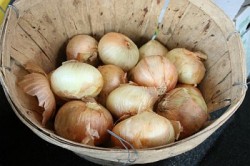 Be prepared to pay more for blueberries and Vidalia onions. They will cost more come 2012. Georgia’s state immigration law is now taking its toll in an important sector of its economy—agriculture. The state is famous for its blueberries and Vidalia onions. Georgia’s state immigration law has chased away its migrant workers—both legal and undocumented. Since police were given the power to check all identification of those they suspected of being “illegals,” most of the migrant population has fled the state. If this was the intention of the law then the Georgia politicians have succeeded. But the state and people are now paying a price for this.
Unlike crops like corn, soybeans and wheat which can be harvested by machines, blueberries and Vidalia onions have to be picked by hand. And not just by hand but by those skilled at knowing which fruits are ripe to pick and which are good to pick. Migrant workers, who have been doing this for years, know what to look for. So the Georgian state government’s efforts of using people on probation or hiring those currently unemployed will not work at saving this harvest. More than that the farmers who own the state’s blueberry and Vidalia onion fields will think twice before wanting any of these people. The farmers knew their migrant workers, but they do not know people who had been convicted of crimes who may be not only an unreliable workforce but a dangerous one. In fact, farmers are already reporting their blueberries are rotting in the fields because they do not have enough people to pick them. The Vidalia onions, which are planted in the fall and harvested in the spring, give the Georgia farmers two crops that help keep their farms operating all year-round and provide a good source of income.
Of course, all of that goes on the premise they can get their onions picked and to market. With Georgia’s current state immigration law this does not look to be the case. The estimated loss for the farmers in Georgia will be $796 million this year, and that is just for the blueberries. Since the onions have not yet been harvested the agricultural loss could be much higher. And with Georgia already being $1.3 billion in debt, this loss is only putting the state deeper in a hole. And as is indicative of the state’s food chain, if the harvesting of the blueberries and Vidalia onions is disrupted, it will mean job losses elsewhere. For those who process the blueberries and onions, for those who must drive these crops to market, and for those stores that sell the blueberries and onions, the losses will be millions of dollars more. With so many companies and middlemen unable to make money from the blueberry and onion harvests, this will mean tens of thousands more people will lose their jobs.
To the politicians in Georgia, this seems to be an “acceptable loss.” They say that all of the “illegals” being chased out of Georgia will mean less money spent on teaching the children of the undocumented, giving more jobs to American workers currently unemployed, less crime, and in the long run (at least in the view of the state politicians) a “better quality of life.” I seriously doubt that. An agricultural system in ruins, record number of businesses closing because the agriculture sector has been hit, and a record number of people forced to flee the state—taking their money and skills out—will only leave Georgia a much poorer place. The Georgian state politicians are truly reaping a harvest of sorrow.






Georgia’s Harvest of Sorrow
By: Daniel Nardini
Unlike crops like corn, soybeans and wheat which can be harvested by machines, blueberries and Vidalia onions have to be picked by hand. And not just by hand but by those skilled at knowing which fruits are ripe to pick and which are good to pick. Migrant workers, who have been doing this for years, know what to look for. So the Georgian state government’s efforts of using people on probation or hiring those currently unemployed will not work at saving this harvest. More than that the farmers who own the state’s blueberry and Vidalia onion fields will think twice before wanting any of these people. The farmers knew their migrant workers, but they do not know people who had been convicted of crimes who may be not only an unreliable workforce but a dangerous one. In fact, farmers are already reporting their blueberries are rotting in the fields because they do not have enough people to pick them. The Vidalia onions, which are planted in the fall and harvested in the spring, give the Georgia farmers two crops that help keep their farms operating all year-round and provide a good source of income.
Of course, all of that goes on the premise they can get their onions picked and to market. With Georgia’s current state immigration law this does not look to be the case. The estimated loss for the farmers in Georgia will be $796 million this year, and that is just for the blueberries. Since the onions have not yet been harvested the agricultural loss could be much higher. And with Georgia already being $1.3 billion in debt, this loss is only putting the state deeper in a hole. And as is indicative of the state’s food chain, if the harvesting of the blueberries and Vidalia onions is disrupted, it will mean job losses elsewhere. For those who process the blueberries and onions, for those who must drive these crops to market, and for those stores that sell the blueberries and onions, the losses will be millions of dollars more. With so many companies and middlemen unable to make money from the blueberry and onion harvests, this will mean tens of thousands more people will lose their jobs.
To the politicians in Georgia, this seems to be an “acceptable loss.” They say that all of the “illegals” being chased out of Georgia will mean less money spent on teaching the children of the undocumented, giving more jobs to American workers currently unemployed, less crime, and in the long run (at least in the view of the state politicians) a “better quality of life.” I seriously doubt that. An agricultural system in ruins, record number of businesses closing because the agriculture sector has been hit, and a record number of people forced to flee the state—taking their money and skills out—will only leave Georgia a much poorer place. The Georgian state politicians are truly reaping a harvest of sorrow.