By Daniel Nardini
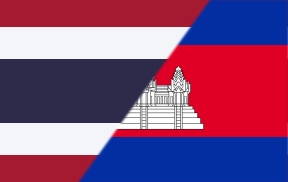 In recent weeks, Thai military forces have made some gains in seizing land under dispute between the Kingdom of Cambodia and the Kingdom of Thailand. In the former Cambodian village of Prey Chan, 1,200 Cambodians were forced to flee their village for a nearby Buddhist temple as Thai soldiers looted the village. In the Cambodian village of Ban Nong Chan, the Thai military sealed off the place as the Thai military bulldozed homes belonging to the Cambodian villagers. Thousands of Cambodians lost everything as they tried to survive with what little they could take when they fled the war zone. The government of the People’s Republic of China donated tents for the Cambodian villagers who had been displaced by the war. Since the border dispute between Thailand and Cambodia erupted into open warfare, almost one million people (some Thai, but mostly Cambodian) have been displaced.
At issue is the current border between the two countries which includes 800 square kilometers of land. Over a century ago, France had, according to the Thai government, seized this land for their colonial possession of Cambodia. The Cambodian government has countered that this land had always belonged to Cambodia and that Thailand had originally seized it from Cambodia in the middle 19th Century. Whatever the truth, the border has long been an issue that had never been resolved. The border dispute had been subsumed into other historical events that had wracked Southeast Asia for decades. There was the first Indo-China War for Independence (1945-1954) where the Vietminh fought against the French colonial forces. There was the second Indo-China War which for Americans became known as the Vietnam War (1955-1975) where the United States and its allies fought against the North Vietnamese and their allies. Then there was the Khmer Rouge who ruled Cambodia from 1975 to 1979 who slaughtered anywhere between one to three million Cambodians in a genocidal policy of remaking Cambodia. During Khmer Rouge rule, a couple of million Cambodians fled to Thailand where they received refugee status. Most Cambodians returned to Cambodia, but some stayed in Thailand including the disputed border area.
Given all of this, it seems almost inexplicable that both Thailand and Cambodia would want to start a war for any reason. For almost a generation, both countries had remained at peace. The border area had become an open region of trade where both sides benefited. Over the past couple of years, the border dispute started to return. The fight was more between the Thai and Cambodian governments than between the Thai and Cambodian peoples. After all, the Thai and Cambodian people had more in common with each other than anything else. They belonged to the same branch of Buddhism (Theravada Buddhism), their customs and architecture are similar, and the Thai and Cambodian languages share the same alphabet. When both governments introduced military units to the area this is when the whole border became an intense powder-keg. And yes, it blew up. This border war has been overshadowed by far larger events like the Russian invasion of Ukraine, the wars between Sudan and South Sudan, and the civil conflict happening in the United States between the Democrats and the Republicans. Even in many news outlets in Europe there is far, far more information on what is happening in the United States than in an actual war in Southeast Asia between Thailand and Cambodia where people are being killed and displaced on both sides. What a world we live in.







The Cambodia-Thailand War
By Daniel Nardini
At issue is the current border between the two countries which includes 800 square kilometers of land. Over a century ago, France had, according to the Thai government, seized this land for their colonial possession of Cambodia. The Cambodian government has countered that this land had always belonged to Cambodia and that Thailand had originally seized it from Cambodia in the middle 19th Century. Whatever the truth, the border has long been an issue that had never been resolved. The border dispute had been subsumed into other historical events that had wracked Southeast Asia for decades. There was the first Indo-China War for Independence (1945-1954) where the Vietminh fought against the French colonial forces. There was the second Indo-China War which for Americans became known as the Vietnam War (1955-1975) where the United States and its allies fought against the North Vietnamese and their allies. Then there was the Khmer Rouge who ruled Cambodia from 1975 to 1979 who slaughtered anywhere between one to three million Cambodians in a genocidal policy of remaking Cambodia. During Khmer Rouge rule, a couple of million Cambodians fled to Thailand where they received refugee status. Most Cambodians returned to Cambodia, but some stayed in Thailand including the disputed border area.
Given all of this, it seems almost inexplicable that both Thailand and Cambodia would want to start a war for any reason. For almost a generation, both countries had remained at peace. The border area had become an open region of trade where both sides benefited. Over the past couple of years, the border dispute started to return. The fight was more between the Thai and Cambodian governments than between the Thai and Cambodian peoples. After all, the Thai and Cambodian people had more in common with each other than anything else. They belonged to the same branch of Buddhism (Theravada Buddhism), their customs and architecture are similar, and the Thai and Cambodian languages share the same alphabet. When both governments introduced military units to the area this is when the whole border became an intense powder-keg. And yes, it blew up. This border war has been overshadowed by far larger events like the Russian invasion of Ukraine, the wars between Sudan and South Sudan, and the civil conflict happening in the United States between the Democrats and the Republicans. Even in many news outlets in Europe there is far, far more information on what is happening in the United States than in an actual war in Southeast Asia between Thailand and Cambodia where people are being killed and displaced on both sides. What a world we live in.