By: Ashmar Mandou
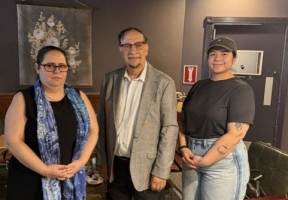 Earlier this month, the non-profit Latino Art Beat had the distinct honor to host Cuban Deputy Chief of Mission of the Embassy of Cuba the Honorable Ambassador Tanieris Dieguez as part of a Chicago historic tour to improve relations between the United States and Cuba. Ambassador Dieguez visited the Institute for the Study of Ancient Cultures Museum, ISAC (formerly the Oriental Institute) of the University of Chicago as well as the Roseland Community Hospital. Amid her visit, Ambassador Dieguez spoke with Lawndale Bilingual News about the importance of developing a healthy dialogue between the United States and Cuba and just how the oil blockade has affected the lives of the Cuban people. On January 29th, 2026 the Trump administration issues an oil and tariff penalties to impose punishing ad valorem tariffs on goods imported from any country that directly or indirectly sells or provides oil to Cuba. On May 1st, 2026 a Secondary Sanctions was issued that allows the U.S. to block assets and restrict U.S. access for foreign individuals and financial institutions that operate in “designated sectors of the Cuban economy (including energy, defense, and mining) or provide financial support to the Cuban government.”
Message to Chicagoans
Yes, well, first of all I want to thank the City of Chicago for having me. It is a pleasure to visit this beautiful city. Chicago has a rich tradition of culture, academics, sports, and this is something we consider to have in common with Cuba. During the revolution we worked a lot, but now in particular, we have development in science, in culture, our culture is very rich. I think it’s important to create bridges between the people of Cuba with the people of Chicago. And I want to thank the City of Chicago for giving us an opportunity to be here.
Blockades
Since January 29th with the executive order of the Trump administration, the blockade has increased. It has been very hard for the Cuban people. With the executive order on May 1st and the related secondary sanctions it has created a humanitarian crisis in Cuba. This moment is very hard for the Cuban people. It’s no secret to the world that the Cuban people are suffering under this energy blockade. This is not the way to move forward in bilateral relations to impose unilateral measures. I mean, I would like to remark that these measures are like a collective punishment for the Cuban people and has created a lot of problems in our society. There are more than 96,000 people waiting for surgeries. There are more than 30,000 women waiting for pregnancy treatments, there are people with cancer…our healthcare system has decreased because of the sanctions. It’s not only unfair, it’s cruel. We need to move forward in bilateral measures, not impose unilateral measures. We need to have conversations as we did in the past.
Dialogue
We are ready to sit and talk about every issue. The only thing we ask is respect to our sovereignty, which is part of every conversation with every nation around the world. We just need to sit and talk. There is nothing else to do because we have already conveyed to the United States administration the willingness to sit and talk through different ways. We always insist in what is our purpose, which is peace, to have good relations, to have good relations as neighbors, to develop things together. To create synergy in culture and economy.