By Daniel Nardini
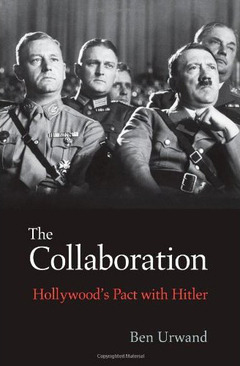
Ben Urwand’s book, The Collaboration: Hollywood’s Pact with Hitler, is a truly frightening look at how Hollywood not only really did nothing to try and publicize the horrible things the Nazis in Germany were doing before World War II, but also did their best to not allow for the most part films to be made that would have been critical of Nazi Germany. In so many ways it was a collaboration of self-censorship—since Germany at the time was Hollywood’s biggest market for American films, Hollywood went out of its way not to make films depict the Nazis in a bad light.
Urwand’s book gives a number of examples of how Hollywood killed films critical of Nazi Germany. One such example was the making of the film The Mad Dog of Europe. Based on a script written by the well-known script writer Herman J. Mankiewicz, The Mad Dog of Europe was a film about the destruction of Germany’s Jews as told from the perspective of a German Jewish family. The film was never made—higher-ups had the whole project killed so that it would never offend the Nazis. It is ironic that Hollywood would kill such a project from the famous script writer who later wrote the script for the legendary film Citizen Kane.
But money and profits, not the plight of those being persecuted by the Nazis, was all that mattered to Hollywood then. Films critical of the Nazis in the 1930’s were very few and very far between. Yet one movie studio, Warner Brothers, did make some films critical of Nazism. A couple of these films were Confessions of a Nazi Spy (1939) that not only talked about the dangers of Nazi Germany but also about how bigotry and racism are just as equally a threat to humanity. Another film, The Black Legion (1936), focused more on the Ku Klux Klan, but did tie in Nazism indirectly.
Sadly, these films were more of the exception than the rule about the evils of Nazi Germany. Only when the United States went to war against Nazi Germany did this change. It is a tragic chapter in the history of Hollywood that it collaborated with the Nazis by making no films critical of the Nazis. In my view, just as equally critical is that Hollywood is again making the same tragic mistake by collaborating with the Chinese Communists in making no films critical of the People’s Republic of China.
It comes as no surprise because, like Nazi Germany, China has become Hollywood’s biggest growing market for American films. And making films critical of the Chinese Communist Party is a major no no for Hollywood. If anything, directors and Hollywood producers are going out of their way not to offend the Chinese government. One excellent example was the remake of the 1984 movie Red Dawn. The remake was originally to show a Chinese invasion of the United States, but this was changed to a North Korean invasion of the United States so as not to offend the Chinese government.
Hence, you are not likely to see films critical of the Chinese Communists, films on how the Chinese government imprisons, tortures and kills dissidents, exterminates the Tibetan people, or is posing as a military threat against its neighbors. In fact, many American Hollywood stars have gone to China to give promotionals about their movies in exchange for large sums of money from the Chinese government. There are a few films critical of the Chinese Communist Party, but only a few at present (I will say more about them another time). Like with how it dealt the Nazis in the 1930’s, it seems that Hollywood has learned nothing from history.






Hollywood’s Collaboration With the Nazis
By Daniel Nardini
Ben Urwand’s book, The Collaboration: Hollywood’s Pact with Hitler, is a truly frightening look at how Hollywood not only really did nothing to try and publicize the horrible things the Nazis in Germany were doing before World War II, but also did their best to not allow for the most part films to be made that would have been critical of Nazi Germany. In so many ways it was a collaboration of self-censorship—since Germany at the time was Hollywood’s biggest market for American films, Hollywood went out of its way not to make films depict the Nazis in a bad light.
Urwand’s book gives a number of examples of how Hollywood killed films critical of Nazi Germany. One such example was the making of the film The Mad Dog of Europe. Based on a script written by the well-known script writer Herman J. Mankiewicz, The Mad Dog of Europe was a film about the destruction of Germany’s Jews as told from the perspective of a German Jewish family. The film was never made—higher-ups had the whole project killed so that it would never offend the Nazis. It is ironic that Hollywood would kill such a project from the famous script writer who later wrote the script for the legendary film Citizen Kane.
But money and profits, not the plight of those being persecuted by the Nazis, was all that mattered to Hollywood then. Films critical of the Nazis in the 1930’s were very few and very far between. Yet one movie studio, Warner Brothers, did make some films critical of Nazism. A couple of these films were Confessions of a Nazi Spy (1939) that not only talked about the dangers of Nazi Germany but also about how bigotry and racism are just as equally a threat to humanity. Another film, The Black Legion (1936), focused more on the Ku Klux Klan, but did tie in Nazism indirectly.
Sadly, these films were more of the exception than the rule about the evils of Nazi Germany. Only when the United States went to war against Nazi Germany did this change. It is a tragic chapter in the history of Hollywood that it collaborated with the Nazis by making no films critical of the Nazis. In my view, just as equally critical is that Hollywood is again making the same tragic mistake by collaborating with the Chinese Communists in making no films critical of the People’s Republic of China.
It comes as no surprise because, like Nazi Germany, China has become Hollywood’s biggest growing market for American films. And making films critical of the Chinese Communist Party is a major no no for Hollywood. If anything, directors and Hollywood producers are going out of their way not to offend the Chinese government. One excellent example was the remake of the 1984 movie Red Dawn. The remake was originally to show a Chinese invasion of the United States, but this was changed to a North Korean invasion of the United States so as not to offend the Chinese government.
Hence, you are not likely to see films critical of the Chinese Communists, films on how the Chinese government imprisons, tortures and kills dissidents, exterminates the Tibetan people, or is posing as a military threat against its neighbors. In fact, many American Hollywood stars have gone to China to give promotionals about their movies in exchange for large sums of money from the Chinese government. There are a few films critical of the Chinese Communist Party, but only a few at present (I will say more about them another time). Like with how it dealt the Nazis in the 1930’s, it seems that Hollywood has learned nothing from history.