
The Danger of Myanmar’s Opium Trade

Lawndale News Chicago's Bilingual Newspaper - Commentary

by Daniel Nardini

Without question, most of the world’s opium comes from Afghanistan. This comes as no surprise—the Taliban use the profits from the opium trade to finance their operations, and opium is sadly the main cash crop for too many Afghan farmers. Now Myanmar is coming into the opium trade. Even with western investments coming into that country, the average Burmese farmer has little to no money. So, following a centuries old tradition, many Burmese farmers are again turning towards growing opium. While opium production in Myanmar is still small scale compared to Afghanistan, it is growing. In fact, opium production has more than tripled in Myanmar since 2006. Either there is little that the Myanmar authorities can do about the opium trade, or they are turning a blind eye to the activity.

The real problem is that the opium is grown is the eastern part of the country—an area the Myanmar government has no real control over. Even though the amount of opium coming from Myanmar is still small scale, Myanmar opium is considered “better quality” compared to Afghan opium. At this point, Myanmar opium is usually exported to China. However, this could be changing as the overlords of the Myanmar opium trade are looking for more “markets” for their opium. And the United States is definitely in their sights. As if opium, processed into heroin, is not bad enough, but now a “higher grade” opium may be on the table for all those who might get hooked on this poison. This is bad for law enforcement as well as possibly U.S.-Myanmar diplomatic relations. Legalizing opium and opium products is not a good option since opium is too addictive, and would cause irreparable damage to an individual’s health.

The real alternative is to help the Myanmar government be able to take control of a part of their own country largely out of control. More than that, help the Myanmar government buy up the opium for products in America that can be used in everyday medicine that could save a person’s life (note: opium is used to make medicines such as codeine which is a pain killer). The important thing is to stop the Myanmar opium trade from reaching America’s shore.

Basil Chicken Over Angel Hair

Lawndale News Chicago's Bilingual Newspaper - Food

Ingredients
Original recipe makes 4 servings Change Servings

  • 1 (8 ounce) package angel hair pasta
  • 2 teaspoons olive oil
  • 1/2 cup finely chopped onion
  • 1 clove garlic, chopped
  • 2 1/2 cups chopped tomatoes
  • 2 cups boneless chicken breast halves, cooked and cubed
  • 1/4 cup chopped fresh basil
  • 1/2 teaspoon salt
  • 1/8 teaspoon hot pepper sauce
  • 1/4 cup Parmesan cheese

Directions

  • In a large pot of salted boiling water, cook angel hair pasta until it is al dente, about 8 to 10 minutes. Drain, and set aside.
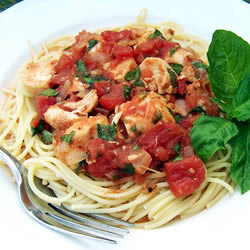
  • In a large skillet, heat oil over medium-high heat. Saute the onions and garlic. Stir in the tomatoes, chicken, basil, salt and hot pepper sauce. Reduce heat to medium, and cover skillet. Simmer for about 5 minutes, stirring frequently, until mixture is hot and tomatoes are soft.
  • Toss sauce with hot cooked angel hair pasta to coat. Serve with Parmesan cheese.

Finanzas: Contratiempos, pero con futuro

Lawndale News Chicago's Bilingual Newspaper - Noticias Locales

Algunos pueden estar olvidando las penurias de la Gran Recesión pero, para muchos hispanos, en especial los mayores, la lucha dista mucho de estar por terminar. Según un reporte del Pew Research Center, Wealth Gaps Rise to Record Highs Between Whites, Blacks and Hispanics (La brecha de riqueza alcanza cifras récord entre blancos, negros e hispanos),los hispanos tuvieron la mayor pérdida de riqueza en el hogar durante la recesión, pasando de $18,359 en el 2005 a $6,325 en el 2009, una caída impactante del 66%. Incluso cinco años después de que terminara oficialmente la recesión, las disparidades en la riqueza entre los hispanos y otros grupos siguen siendo enormes.

El impacto de la recesión en el valor de las viviendas también causó estragos financieros en los hispanos. Y debido a que los hispanos, en general, mantienen una proporción mucho mayor que otros grupos de su patrimonio neto en el valor líquido de la vivienda, el impacto es tan amplio como profundo.

En estos tiempos de dificultades económicas, el Seguro Social sigue siendo la fuente de ingresos más confiable para los hispanos mayores. Y mientras que algunos han reservado ahorros para la jubilación o reciben apoyo de sus parientes, la SSA (Administración del Seguro Social) indica que al menos el 40% de las parejas mayores casadas y el 63% de los hombres y las mujeres solteros dependen del Seguro Social para el 90% o más de sus ingresos. Aunque sus beneficios son modestos, más del 50% de los hispanos mayores vivirían en la pobreza si no recibieran cheques del Seguro Social.

Hoy en día, los trabajadores hispanos representan alrededor del 15% de la fuerza laboral de Estados Unidos y contribuyen de manera significativa a los fondos del Seguro Social a través del impuesto a la nómina. Pero, irónicamente, hay inmigrantes hispanos mayores que han contribuido al Seguro Social pero no pueden aprovechar los programas de apoyo, como el SNAP (Programa Suplementario de Asistencia Nutricional) o recibir SSI (Seguridad de Ingreso Suplementario). Se les deniegan porque no cumplen con los requisitos de elegibilidad, como ser ciudadanos naturalizados o acumular el nivel necesario de historial laboral en Estados Unidos.

Y la cobertura de salud es otro desafío significativo para los hispanos mayores. Incluso los modestos aumentos anuales del Seguro Social no son suficientes para ayudar a la mayoría de los adultos mayores a seguirle el ritmo a los crecientes costos de la atención médica, así que deben desembolsar más dinero. Más del 5% de los hispanos mayores carece de seguro médico, en comparación con menos del 1% entre los mayores no hispanos.

La reciente crisis financiera de nuestro país ha generado contratiempos para las familias y las personas de todas las edades, pero los hispanos han mantenido una perspectiva positiva del futuro, ya sea para ellos mismos o para sus hijos. Una investigación adicional de Pew muestra que dos tercios de los hispanos esperan que sus circunstancias económicas mejoren en un futuro cercano y creen que sus hijos disfrutarán de un mejor nivel de vida que ellos.

Por más de 55 años, AARP ha trabajado para mejorar la vida de los hombres y mujeres mayores y sus familias, en especial para mejorar su salud y su seguridad financiera. Trabajar para mantener sólido al Seguro Social y a Medicare para las generaciones actuales y futuras es una parte integral de lo que hacemos. También lo es generar conciencia sobre los programas que apoyan una mayor estabilidad económica. Por ejemplo, mientras que algunas personas no resultan elegibles para programas de asistencia alimentaria como el SNAP, muchas sí lo son pero no lo saben.

Ahorrar y generar riqueza en el hogar es indispensable para acrecentar la estabilidad económica en el futuro. A medida que la población hispana aumente en las próximas décadas, AARP continuará apoyando y luchando por estas familias que deseen alcanzar el sueño americano.

Visita AARP.org o AARP.org/espanol para obtener herramientas, información y recursos para mejorar la salud y la seguridad económica y descubrir las posibilidades a tu alcance.

Shedd Aquarium to Close for Maintenance

Lawndale News Chicago's Bilingual Newspaper - Local News

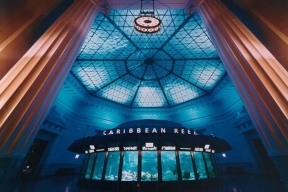
Shedd Aquarium will be closed on Wednesday, Jan. 21st and Thursday, Jan. 22nd for routine maintenance and cleaning. Shedd reopens on Friday, Jan. 23rd, welcoming back locals with Illinois Resident Discount/Free General Admission Days through Tuesday, Jan. 27th. Every Monday and Tuesday in January, Illinoisans enjoy free general admission with access to the aquarium’s original galleries during Illinois Resident Discount/Free General Admission Days. On those days, residents can purchase discounted admission to Shedd’s other exhibits, including the Abbott Oceanarium and Wild Reef. Proof of residency must be provided in-person when purchasing tickets at the discounted rate. For the latest information about the aquarium hours and discounts, please visit Shedd’s website or call 312-939-2438. John G. Shedd Aquarium, 1200 S. Lake Shore Drive, Chicago.

David Bowie Exhibition Breaks Records

Lawndale News Chicago's Bilingual Newspaper - Local News

More than 193,000 people visited the Museum of Contemporary Art Chicago (MCA) during the 15-week run of the David Bowie Is exhibition (September 23, 2014–January 4, 2015), setting a new attendance record for the museum. As the most successful exhibition in the MCA’s 47-year history, David Bowie Is also set new attendance records for all of the Bowie-related programs and performances, some selling out in less than an hour, and the highest sales for the MCA Store with the addition of the Bowie-themed store. The MCA was the only US venue for this groundbreaking exhibition, organized by the Victoria and Albert Museum, London.

PHOTO CREDIT:

Installation view, David Bowie Is, MCA Chicago. September 23, 2014 – January 4, 2015. Photo: Nathan Keay, © MCA Chicago.

Valentine’s Day Comedy Show

Lawndale News Chicago's Bilingual Newspaper - Local News

On February 14, 2015 the “I’m no Romeo” comedy show with Elizardi Castro and the salsa rhythms of Johnny Rivera come together through the production of Mike Oquendo Events and Sylvia Hevia Productions to form a great combination of love, laughter and music as the ideal way to celebrate Valentine’s Day. Imagine sharing with your sweetheart Elizardi Castro’s bold and captivating humor and Johnny Rivera’s romantic music. A portion of the proceeds will benefit the RMHC®/HACER® Scholarship Program. The purpose of this program is to increase the number of scholarships at the local level to benefit Hispanic students with financial needs that have demonstrated their academic and leadership abilities as well as their sincere wish to serve their community. The comedy show will take place at Copernicus Center Theater, 5216 W. Lawrence Ave., Chicago at 7:30p.m. Tickets for general audience are $40 and $60 for VIP. Tickets can be purchased through elicastro.com.

Chicago City Treasurer Visits Little Village

Lawndale News Chicago's Bilingual Newspaper - Local News

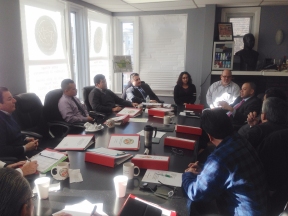
Chicago City Treasurer Kurt Summers visited the Little Village Chamber of Commerce on Wednesday, January 7th. Summers, who has been on the job about a month, is organizing community meetings in each of Chicago’s 77 communities within 77 days. Summers met with about a dozen chamber members, some of whom have owned businesses in Little Village for more than 20 years. Business leaders expressed an interest in having more support for local retail options and restaurants and were pleased to learn more about Summers’ plans to invest in Chicago businesses and neighborhoods.

Those in attendance were also happy to hear about Summers’ plan to leverage the city of Chicago’s scale and purchasing power to help lower the cost of doing business, especially for mom and pop shops. Summers is using the events to learn firsthand about the needs of each community and how he can be most helpful to Chicago’s residents in his new role as City Treasurer. Summers is meeting with residents across the city to engage, discuss and learn about the unique development needs and investment opportunities that each community faces, including Little Village.

Finances: Setbacks, but Looking Forward

Lawndale News Chicago's Bilingual Newspaper - Local News

The hardships of the Great Recession may be fading from memory for some, but for many Hispanics, especially older Hispanics, the struggle is far from over. According to the Pew Research Center report, Wealth Gaps Rise to Record Highs between Whites, Blacks and Hispanics, Hispanics had the greatest loss in household wealth during the recession, falling from $18,359 in 2005 to $6,325 in 2009 – an astonishing 66 percent drop. Even five years after the recession officially ended the disparities in wealth between Hispanics and other groups remain enormous.

The recession’s impact on home values also wreaked financial havoc on Hispanics. And because Hispanics typically maintain a much greater proportion of their net worth in home equity than other groups, the impact was both broad and deep.

In the midst of challenging economic times, Social Security remains the most reliable source of income for older Hispanics. And while some have set aside retirement savings or receive support from relatives, the Social Security Administration indicates at least 40 percent of older married couples and 63 percent of unmarried men and women rely on Social Security for 90 percent or more of their income. While their benefits are modest, more than 50 percent of older Hispanics would live in poverty without their Social Security checks.

Today, Hispanic workers account for about 15 percent of the U.S. workforce and make significant contributions to Social Security funds through payroll taxes. But ironically, there are older Hispanic immigrants who’ve paid into Social Security but can’t take advantage of support programs like the Supplemental Nutrition Assistance Program or receive Supplemental Security Income. They’re denied because they don’t meet eligibility criteria, like becoming naturalized citizens or accumulating the required level of U.S. work history.

And health care coverage is another significant challenge for older Hispanics. Even Social Security’s modest annual increases aren’t enough to help most seniors keep pace with rising health care costs, so they are forced to reach deeper into their pockets. Over 5 percent of older Hispanics lack health insurance, compared with less than 1 percent for older non-Hispanics.

Our nation’s recent financial crisis created setbacks for families and individuals of all ages, but Hispanics have maintained a strong positive outlook toward the future, either for themselves or their children. Additional Pew Research shows that two-thirds of Hispanics expect their financial circumstances to improve in the near future and believe their children will enjoy a better standard of living than themselves.

For more than 55 years, AARP has worked to improve the lives of older men and women and their families, especially to improve their health and financial security. Working to keep Social Security and Medicare strong for current and future generations is integral to what we do. So is raising awareness about programs that support greater economic stability. For example, while some people aren’t eligible for food assistance programs like SNAP, many are eligible yet don’t realize it.

Building savings and household wealth is critical for increasing economic stability later in life. As the Hispanic population grows in the coming decades, AARP will continue to fight for and support these families as they pursue the American dream.

Visit AARP.org or AARP.org/espanol for tools, information and resources on improving health and economic security and increasing real possibilities for all.

We Are/Somos Logan Square to Host Gentrification Talk

Lawndale News Chicago's Bilingual Newspaper - Local News

By: Ashmar Mandou

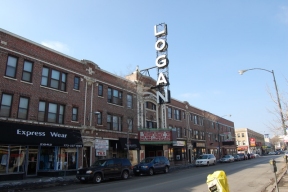
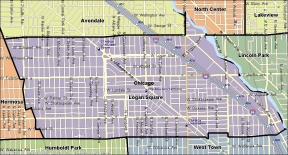
We Are/Somos Logan Square will host a series of educational and participatory events to connect the residents of Logan Square, and beyond, to better understand how gentrification actually works. The organization will explore the roles that developers and banks play, will also discuss racism and class lines, and much more. “As a cultural anthropologist who researches this, and as a kid who grew up in Logan Square, I can tell you that gentrification is the defining urban struggle of our time,” says Dr. Jesse Mumm, Northeastern Illinois University. “We are all talking about it, but few of us truly understand it as it is in Chicago: a racial fix that creates profit out of displacement, disrupts and disperses communities, and ultimately relies on and produces both overt and covert racism.”

We Are/Somos Logan Square has invited housing, youth, and social service leaders, financial experts and local academics to educate the community on how they can move forward together to create a more stable neighborhood for all residents. The series of discussions will challenge myths and create sustainable ways to keep the Logan Square neighborhood vibrant. “Decisions for our neighborhood shouldn’t be made by those who only seek a prolific profit. Decisions should be made by those who believe in the potential a neighborhood holds and helps the ones inhabiting to grow within it,” says Patricia Padilla, a member of We Are/Somos Logan Square and former life-long resident of Logan Square who was evicted last winter by M. Fishman Co., along with her family, from the apartment they rented for 13 years. The series will be held as follows:

Lawndale News Chicago's Bilingual Newspaper - Local News

The Basics:
What is gentrification and how does it impact all of us?
Wednesday, January 14th, 2015
7:00‐8:30 pm
Grace Methodist Church, 3325 W. Wrightwood Ave.

History of Gentrification:
Giving historical context to neighborhood change to learn from the past.
Saturday, January 17th, 2015
12:00‐1:30 pm
St. Luke’s Lutheran Church, 2649 N. Francisco Ave

Racism and Classism:
How and why displacement of minorities and poor people happens?
Wednesday, January 21st, 2015
7:00‐8:30 pm
Grace Methodist Church
3325 W. Wrightwood Ave.

Affordability saving Diversity:
Exploring ways the community can improve while preserving economic and racial diversity.
Saturday, January 24th, 2015
12:00‐1:30 pm
Humboldt Park United Methodist Church 2122
N. Mozart St.

We Are/Somos Logan Square is a grassroots organization with a mission to empower the community through dialogue and action. If you would like to learn more about We Are/Somos Logan Square visit www.facebook.com/weare.somos.LSQ.

Peoples Gas & North Shore Gas Remind Residents to State Safe

Lawndale News Chicago's Bilingual Newspaper - Business

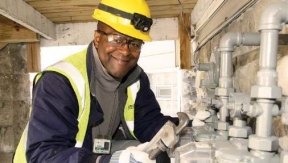
The Chicagoland area is facing a winter weather advisory that includes sub-zero temperatures and significant snow accumulation. With several inches of snow predicated, Peoples Gas and North Shore Gas remind residents and businesses that it is important to keep the area around natural gas meters, regulators and piping dear from snow and ice to help ensure the safe and continuous operation of heating equipment. Deep snow and ice buildup around gas meters can lead to meter damage, equipment malfunction and a disruption in service. Simply brushing deep snow away from the meter and regulator with a soft broom is sufficient. Never use a shovel or motorized snow removal equipment near a natural gas meter.

Customers with high-efficiency furnaces and water heaters that vent through the wall (not into a chimney) should prevent the buildup of snow or ice outside around the vent. High-efficiency equipment provides great savings, but a blocked vent could cause the heating system to malfunction by shutting off or, in extreme cases, lead to an accumulation of carbon monoxide in the home. Customers should check the outside vents just to make sure they aren’t covered with snow or ice and call Peoples Gas at (866) 556-6001 or North Shore Gas at (866) 556-6004 in cases of heavy ice buildups around the vents.
For more tips on safety around natural gas, including tips on CO safety, please visit our website at www.peoplesgasdelivery.com or www.northshoregasdelivery.com.